Patch Testing: A Sensible Routine Before You Commit to a Product
A simple patch-testing routine, what to look for on a label if your skin reacts easily, and when to stop guessing and speak to a professional.
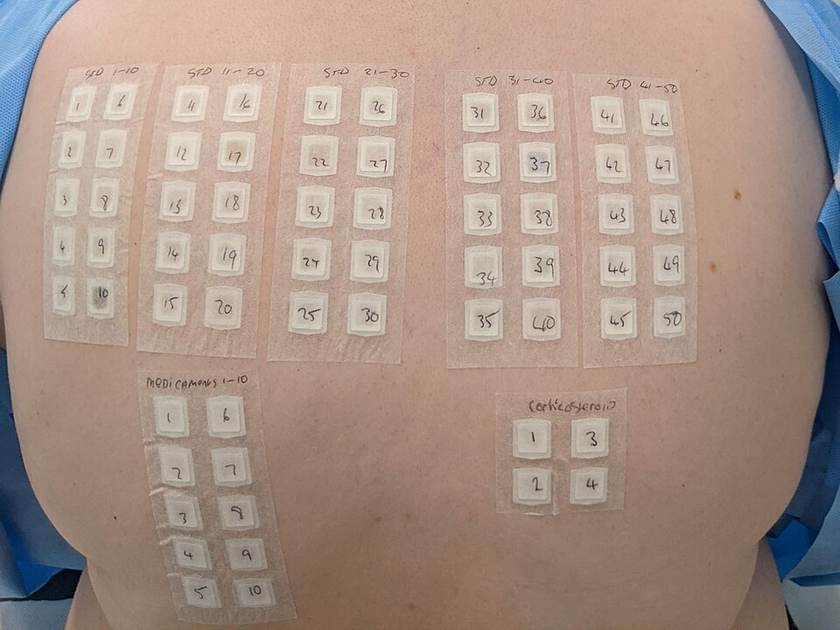
This guide is about buying, not about skin. It explains why testing a product before committing to it is a sound purchasing habit, how to follow a manufacturer's instructions properly, and what your options are if something does not suit you.
It is not medical or dermatological advice. It does not name ingredients as unsafe, does not interpret reactions, and cannot tell you whether a product is suitable for you. For anything concerning your skin, a pharmacist is free to consult and a GP or dermatology service is the right route for anything persistent.
Why patch testing is a buying decision
Patch testing is usually framed as a safety step. It is also a straightforwardly economic one, and framing it that way makes people actually do it.
An untested product bought in a large size and found unsuitable is money spent twice: once on the product and once on whatever replaces it. Testing first converts a large irreversible purchase into a small reversible one, which is the same logic that governs buying small sizes first in beauty cost per use.
It also interacts with returns. Sealed cosmetics unsealed after delivery generally fall outside the standard cancellation right for online purchases, so opening a product often ends the change-of-mind route — the position set out in returning cosmetics in the UK. Testing a small quantity before committing is therefore the practical equivalent of keeping your options open.
A step-by-step patch test routine
The manufacturer's own instructions come first, because they are written for that specific product and may differ from any general routine. Where they exist, follow them.
The general shape of a patch test, as commonly recommended:
- Read the instructions and the ingredients list before opening anything.
- Choose a discreet area of skin away from the eyes, and clean and dry it.
- Apply a small amount — the quantity the manufacturer specifies, or a modest amount if it does not.
- Leave it undisturbed for the period stated on the packaging.
- Check the area over the following days, since not all responses are immediate.
- If anything appears, stop, wash the area gently, and do not proceed to wider use.
- If nothing appears, introduce the product gradually rather than all at once.
Two honest limitations. A patch test cannot replicate normal use — area, quantity, frequency and combination with other products all differ. And some responses appear only after repeated exposure or in combination with sunlight, which a single test will not reveal. A clinical patch test performed by a dermatology service is a different and far more thorough procedure, and is the right route where reactions are recurrent.
Label terms that flag common irritants
We deliberately do not publish a list of ingredients to avoid. Ingredients affect people differently, cosmetic ingredients are assessed for safety under the applicable rules, and a generic avoidance list would be both unreliable and unfair to lawfully used materials.
What is genuinely useful is knowing where the information lives. Read the list using how to read a cosmetics ingredients list, and note three things: whether Parfum or Aroma appears; whether individual fragrance allergens are named after it; and where any prominent marketed ingredient sits relative to the one per cent line, since concentration is part of the picture, as covered in skincare actives and concentration.
Then make it personal. If something has affected you before, find its INCI name — the standardised name, not the marketing one — and check for that specific name on any product you are considering. A brand's "sensitive" or "gentle" labelling is not a defined term and does not substitute for reading the list, as discussed in beauty marketing claims explained.
Fragrance and the allergen declaration list
Fragrance is treated specially in cosmetic labelling and is worth understanding.
A perfume composition may appear as the single word Parfum, with its constituents treated as proprietary. However, specific fragrance allergens listed in the regulation's annexes must be named individually in the ingredients list when present above the thresholds set there — which is why names such as Limonene or Linalool sometimes appear after Parfum. Those are disclosures of components within the fragrance, not extra additives.
Three practical consequences. "Unscented" and "fragrance-free" are not the same: an unscented product may contain a masking fragrance. Essential oils are fragrance materials, and a botanical origin does not change the disclosure rules. And where you know a specific declared allergen has affected you, that declaration is exactly the information the labelling system exists to give you.
Introducing one product at a time
The single most useful habit in this whole article, and the cheapest.
Introducing several new products together makes attribution impossible: if something happens, you cannot tell which product was responsible, and the usual response is to abandon all of them — including ones that were fine. Introducing one at a time, with a gap before the next, preserves the information.
Two supporting habits. Keep a short written note of what you started and when, because memory reconstructs badly. And date the packaging at opening, which matters for the period after opening as set out in cosmetics expiry and PAO explained, and also tells you how long you have actually been using something.
This is a purchasing discipline as much as a skin one: it prevents the common outcome of a shelf full of part-used products, none of which can be evaluated.
Sample sizes, testers and hygiene
Sample and travel sizes are the lowest-cost way to trial a product, and the premium per millilitre is the price of not buying a large container you may not use.
In-store testers are shared products handled by many people. Where you use them, use a fresh applicator or spatula rather than fingers, avoid applying anything near the eyes or on broken skin, and prefer testers dispensed by staff. Products in jars are the most exposed format, for the reasons set out in the expiry guide.
Decanted or shared products fall outside the manufacturer's assumptions, so the stated period after opening no longer reliably applies — a good reason not to accept decanted product from someone else.
Two further notes: check the period after opening on samples, which is often short, and discard anything whose colour, smell or texture has changed rather than testing it.
Returns if a product causes a reaction
This is where buying and rights meet, and the position is more nuanced than either "you can always return it" or "you can never return opened cosmetics".
For online purchases, the change-of-mind cancellation right generally ceases for sealed goods unsuitable for return on health or hygiene grounds once they have been unsealed. That is a change-of-mind rule, and it says nothing about faulty goods.
Separately, goods bought from a trader must be of satisfactory quality, fit for purpose and as described. A product that is contaminated, has deteriorated, or does not match its description is arguably not conforming, and that route is unaffected by the seal. An individual reaction to a product that is otherwise sound is a different matter, since a product can be perfectly compliant and still not suit a particular person — which is why many retailers operate goodwill policies that go beyond the law.
The practical route, the evidence to keep and how to put it in writing are set out in returning cosmetics in the UK.
When to see a pharmacist or GP instead
Some situations are not shopping problems, and treating them as such wastes time.
Speak to a pharmacist or doctor promptly if a reaction is painful, spreading, blistering, or does not settle after stopping the product — and seek urgent medical help if there is swelling of the face, mouth or throat, or any difficulty breathing.
Take advice before using unfamiliar products if you have an existing skin condition, use prescribed treatments, or are pregnant or breastfeeding, because interactions and contraindications exist that no label reading will surface.
And consider asking about a clinical patch test where reactions recur without an obvious cause. That is a diagnostic procedure carried out by a dermatology service, quite different from the precaution described in this article, and it is the appropriate route when the question has stopped being about which product to buy.
Frequently asked questions
How do I patch test a new product?
Follow the manufacturer's own instructions, which are specific to that product. Generally: apply a small amount to a discreet area, leave it undisturbed for the stated period, and check over the following days before wider use. Introduce one product at a time so any reaction can be attributed.
Does patch testing guarantee I won't react?
No — it is a precaution, not a guarantee. Some responses appear only after repeated use or sun exposure, and a small test area cannot replicate normal use. A clinical patch test by a dermatology service is a different, more thorough procedure.
Which label terms flag likely irritants?
Rather than a list to avoid, check whether fragrance is declared, whether individual fragrance allergens are named, and where a marketed ingredient sits relative to the one per cent line. If something has affected you before, look for it by its INCI name.
When should I speak to a pharmacist or doctor?
If a reaction is painful, spreading, blistering or does not settle after stopping — and urgently if there is swelling or difficulty breathing. Also before using unfamiliar products if you have a skin condition, use prescribed treatments, or are pregnant or breastfeeding.
How we write this guide
This article is deliberately narrow. It describes patch testing as a purchasing precaution, defers throughout to the manufacturer's own instructions for any specific product, and describes fragrance allergen declaration by reference to the requirement that listed allergens be named individually above the thresholds set in the regulation's annexes, without quoting those thresholds, which are amended periodically.
Nothing here is medical, dermatological or diagnostic advice. We give no timings that would override a manufacturer's instructions, publish no ingredient-avoidance list, name no ingredient as unsafe, and interpret no reaction or condition. We tested no products and name no brands. Anyone with a reaction, an existing skin condition, prescribed treatments, or who is pregnant or breastfeeding should consult a pharmacist, GP or dermatology service; urgent symptoms such as swelling or breathing difficulty require immediate medical help.
Recommended Today may earn commission from links to retailers. Commission does not influence our editorial content. This guide is reviewed at least every 12 months. Next scheduled review: August 2027.