Beauty Claims Decoded: "Clinically Proven", "Dermatologist Tested" and Friends
Which cosmetics claims are regulated, which are meaningless, and how to read the asterisk under a headline statistic on a beauty advert.
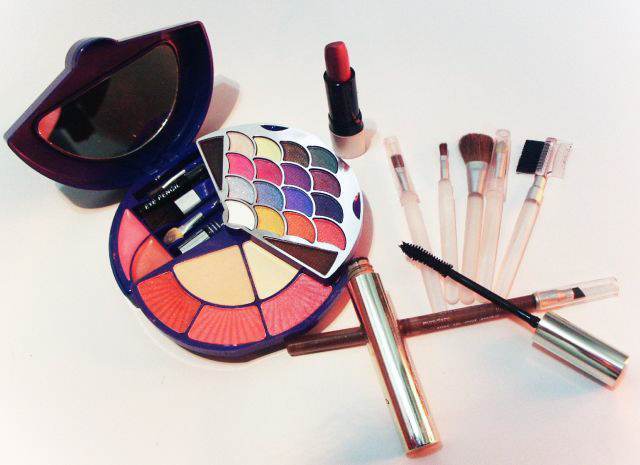
Beauty advertising has evolved a house style: a large percentage, a confident verb, and a line of grey type at the bottom that nobody reads. The grey type is not a legal formality — it is where the claim is defined, and it routinely turns a dramatic headline into something much narrower.
This guide explains what the common phrases mean, what the rules require, and how to read the small print in about thirty seconds. It is about claims, not skin: nothing here is medical or dermatological advice, and no product's effectiveness is assessed.
Which claims are regulated in the UK and which aren't
More is regulated than most shoppers assume, but not in the way they imagine. There is no approved list of permitted marketing words. Instead, cosmetic claims must satisfy a set of common criteria that apply to every claim, in any medium — packaging, advertising, websites, social posts — and to text, images, logos and symbols alike.
The criteria are legal compliance, truthfulness, evidential support, honesty, fairness and informed decision-making. They apply together: a claim failing any one of them should not be made. Evidential support is the one that matters most to readers, because it means the person responsible for the product must hold documentation substantiating the effect claimed, in the product's information file.
Two consequences follow. A phrase like "clinically proven" is not a protected term, but the assertion behind it must be supported by evidence a regulator could demand. And a claim that a cosmetic has been approved or authorised by an official body should not be made at all, since cosmetics are not authorised that way. Advertising is separately governed by the UK advertising codes and the Advertising Standards Authority, which publishes its rulings — a searchable record of claims that have already been challenged.
"Clinically proven" and what the study usually was
"Clinical" in cosmetics does not mean what it means in medicine. It generally indicates a study conducted under supervised conditions with human participants — not a randomised controlled trial, not peer review, and not regulatory approval.
Four things vary enormously between studies and are rarely visible in the headline: how many people took part; how long the study ran; what was actually measured; and what the comparison was. A result measured against no treatment is a different claim from one measured against a competitor, or against the same participants' baseline.
Two words do a great deal of quiet work. "Proven" often attaches to a narrower endpoint than the headline implies — hydration measured instrumentally, rather than the visible outcome the advert depicts. And "helps" or "helps improve the appearance of" signals a cosmetic claim about appearance rather than a claim about changing the skin's structure, which would take the product outside the cosmetic category altogether.
Reading the small print under a percentage
The footnote is the claim's scope. Read it first and the headline usually shrinks.
Look for five things. The sample size: how many participants produced the figure. The duration: what period of use it describes. The method: whether the result was instrumentally measured or reported by participants. The subject of the claim: some footnotes reveal the study concerned a different product in the range, or the product used alongside other steps. And any conditions of use: twice daily, on cleansed skin, with a specific companion product.
Note also what a percentage is a percentage of. "84% agreed" is a proportion of participants; "increased hydration by 84%" is a proportion of a measurement. These are entirely different statements presented in identical typography, and the difference is the whole claim.
Self-reported results versus measured results
Consumer perception studies ask participants what they noticed. Instrumental studies measure a property with equipment. Both are legitimate, and both appear in advertising, but they support different claims.
Self-reported results are subject to expectation: people who know they are trialling a product tend to report improvement. That does not make the data worthless — how a product feels is a genuine part of what you are buying — but it does mean "participants said" is a claim about perception rather than about the skin.
Instrumental results are more objective and often narrower. A measured increase in one property over a defined period is a real finding that may or may not correspond to anything visible. The most informative adverts distinguish the two explicitly. When a footnote says only "consumer study", assume self-reported unless told otherwise, and apply the same scepticism you would to review manipulation in how to spot fake reviews.
"Dermatologist tested", "hypoallergenic", "non-comedogenic"
Dermatologist tested is a statement about process, not outcome. Testing involving a dermatologist occurred; the phrase does not say how many people, what was measured, or what the result was. "Dermatologist approved" or "recommended" implies more, and should have evidence behind it.
Hypoallergenic suggests a formulation designed to reduce the likelihood of allergic reaction. It is not a guarantee, and nothing can be non-allergenic for everyone. Anyone with a known allergy should read the ingredients list rather than trust the word — the method in how to read a cosmetics ingredients list.
Non-comedogenic indicates a formulation intended not to block pores. Testing methods vary and results depend on the individual, so treat it as a formulation intention rather than a promise.
"Free from" claims deserve particular care. Claims that denigrate an ingredient lawfully used, or that imply safety by absence, sit awkwardly with the fairness and honesty criteria — a point that overlaps heavily with clean beauty and greenwashing and the broader claim-testing habits in how to spot greenwashing.
Sample sizes and why they're published
Sample size appears in the footnote because the criteria require claims to be supported and not to mislead — and a percentage drawn from a small group can be presented in a way that implies far more certainty than it carries.
Two habits help. Convert the percentage back into people: a proportion of a small panel becomes much less impressive expressed as a headcount. And ask who the participants were, since a study conducted on people selected for a particular characteristic supports a claim about that group rather than about everyone.
Absence is informative too. A headline figure with no stated sample size, no duration and no method is a claim whose scope the advertiser has chosen not to disclose. That does not make it false; it makes it unverifiable, which is the same problem described in how to judge product quality online.
Before-and-after imagery rules
Images are claims. The rules treat pictures, symbols and logos as claims in exactly the same way as text, so a before-and-after pair must be honest and must not exaggerate what the product does.
What to look at: whether lighting, angle, expression and camera position match between the two images; whether make-up has been applied in the "after"; whether the images were retouched, and whether that is disclosed; whether hair, styling or posture changed; and whether the caption specifies the time elapsed and the conditions of use. Advertising rules require disclosure where techniques have been used that exaggerate the effect, and the ASA has ruled on such presentations.
Where an image is described as illustrative, or as showing a model rather than a study participant, that is the advert telling you the picture is not evidence.
A three-question test for any beauty claim
- What exactly is being claimed, and about what? Separate the product from the range, the ingredient from the formula, and appearance from structure. An ingredient with a body of evidence behind it does not transfer that evidence to every product containing it — the concentration and formulation question in skincare actives and concentration.
- What is the evidence, and what were its limits? Sample size, duration, method, comparator. If the footnote does not say, the claim's scope is undisclosed.
- Would the claim survive being restated plainly? "Most of a small panel said their skin felt smoother after four weeks" is the same finding as a dramatic headline, and tells you far more about whether it is worth the money.
Frequently asked questions
Is "clinically proven" regulated in the UK?
The phrase has no fixed legal definition, but the claim behind it is regulated. Cosmetic claims must meet common criteria including truthfulness, evidential support, honesty and fairness, with substantiating documentation held in the product information file.
What does "dermatologist tested" mean?
That testing involved a dermatologist. It says nothing about how many people, what was measured, or what the result was — a statement about process, not outcome.
Why is there always an asterisk?
Because the headline needs qualifying. The small print carries the sample size, duration, whether results were measured or self-reported, and sometimes that the claim relates to a different product or to use alongside other steps.
Does "hypoallergenic" mean no reaction?
No. It suggests a formulation intended to minimise the risk, but nothing is non-allergenic for everyone. With a known allergy, read the full ingredients list rather than relying on the term.
How we write this guide
This article is research-led and checked against the claims framework itself: the cosmetic products regulation's article on claims as it applies in Great Britain, and the common criteria regulation setting out the six criteria — legal compliance, truthfulness, evidential support, honesty, fairness and informed decision-making — which apply to text, images, logos and symbols in any medium, with substantiation held in the product information file. Advertising rules and ASA rulings are referred to generically.
Nothing here is medical or dermatological advice, and we assess no product's effectiveness. We publish no study figures, sample sizes or efficacy percentages, and we name no brands or rulings: inventing a plausible statistic in an article about misleading statistics would be self-defeating. No products were tested or ranked. For anything concerning a skin condition, a reaction or prescribed treatment, consult a pharmacist or doctor.
Recommended Today may earn commission from links to retailers. Commission does not influence our editorial content. This guide is reviewed at least every 12 months, and sooner if claims rules change. Next scheduled review: August 2027.