Greenwashing: How to Read an Environmental Claim on a Product
"Eco", "natural", "carbon neutral", "recyclable": which green claims mean something, which are unregulated, and what the UK rules require of sellers.
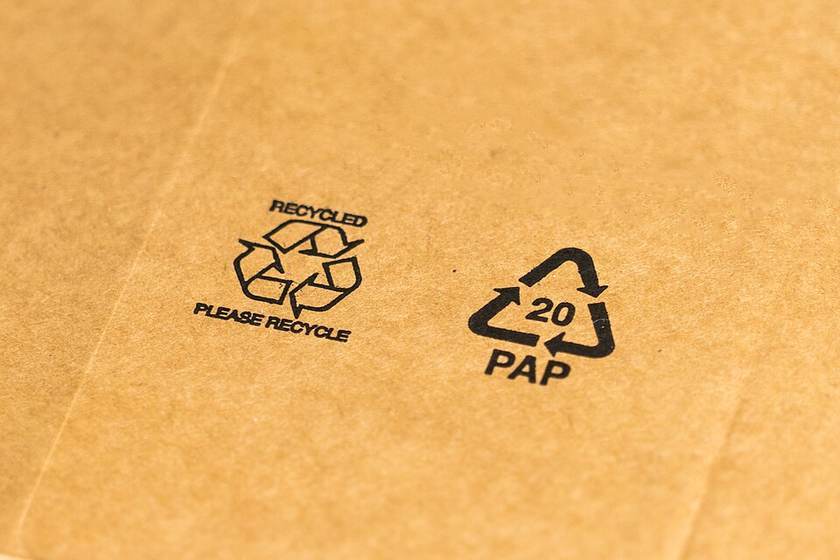
Green claims occupy an unusual position in retail. They influence purchases, they command premiums, and many of the words used to make them have no legal definition at all. A leaf on the packaging is a design choice. "Made with 60% recycled content" is a testable statement. Learning to tell those apart is most of the skill.
This guide sets out what UK rules require, which claim types carry information, and how to verify one in a couple of minutes.
Why green claims are the least regulated words on a label
There is no register of approved environmental adjectives. "Eco-friendly", "green", "natural", "sustainable", "conscious", "responsible" and "kind to the planet" have no fixed legal meanings, so their presence tells you a marketing department chose them.
What is regulated is misleading consumers. Environmental claims sit under general consumer protection law, which means a claim can be unlawful if it is likely to mislead an average consumer into a decision they would not otherwise have taken — whether by being false, by being ambiguous, or by omitting something material. Since April 2025, unfair commercial practices have been governed by the Digital Markets, Competition and Consumers Act 2024, which gives the Competition and Markets Authority direct enforcement powers.
So the question to ask is never "is this word allowed?" but "what specific, checkable fact is being asserted, and about what?" — the same discipline applied to commercial content in how to read a buying guide.
The CMA's Green Claims Code, in plain English
The CMA published the Green Claims Code in 2021 to explain how consumer law applies to environmental claims. It was written when earlier regulations governed unfair practices, and the underlying law has since changed — but the Code remains the reference point for how businesses are expected to behave. Its six principles are worth knowing, because they double as a checklist for readers.
- Claims must be truthful and accurate.
- Claims must be clear and unambiguous — plain language, not terms the seller has defined privately.
- Claims must not omit or hide material information — the positives cannot be presented without relevant negatives.
- Comparisons must be fair and meaningful — like against like.
- Claims must consider the full life cycle where relevant, not one flattering stage of it.
- Claims must be substantiated — evidence must exist, and consumers should be able to see where and how to verify it.
Two details are useful to shoppers. The CMA has said businesses across the supply chain are responsible for claims they pass on — a retailer can be treated as repeating a claim by stocking a product that bears it. And the CMA has issued sector-specific guidance, including for fashion, where claims are especially dense.
Six claim types ranked from meaningful to meaningless
- Quantified, verifiable facts about this product. "Contains 60% post-consumer recycled aluminium." Specific, attributable, checkable. The strongest kind.
- Independent certification against published criteria, with a scheme name and a searchable licence number.
- Specific process or material claims — a named fibre, a stated manufacturing change — which describe something real even without third-party verification.
- Comparative claims — "30% less packaging than our previous design". Meaningful only when the comparator is stated; meaningless when it is not.
- Company-level commitments — targets and pledges. These concern the organisation and future intentions, not the item you are holding.
- Undefined adjectives — eco, green, natural, conscious, planet-friendly. No information content whatever.
A quick heuristic: if the claim survives the question "compared with what, measured how, verified by whom?", it is somewhere in the top three. If it evaporates, it is in the bottom two.
"Recyclable" vs "recycled" vs "recycled content"
These three are routinely used interchangeably and mean quite different things.
Recyclable is a statement about the future and about infrastructure, not about the product's history. It means the material can in principle be recycled — which may depend on whether your local authority collects it, whether the item is separable into its component materials, and whether a market exists for the output. A claim on a mixed-material item is particularly weak, because in practice it may need dismantling that never happens.
Recycled is ambiguous and, used bare, tells you nothing about proportion.
Recycled content, with a percentage, is a fact about the item in your hand. Better still is a claim distinguishing post-consumer content, recovered after use, from pre-consumer or post-industrial material, which is manufacturing offcuts that would have been reprocessed regardless.
Two further checks: does the percentage refer to the product, the packaging, or one component of either? And is the item designed to be separated at end of life, or bonded in a way that prevents it? The disposal question also belongs in the ownership arithmetic in total cost of ownership.
Offsetting and carbon-neutral claims
"Carbon neutral" almost never means no emissions were produced. It usually means emissions were produced and then counterbalanced, most often by buying offsets — credits representing emissions avoided or removed elsewhere.
Four questions separate a substantiated claim from a decorative one. What scope is covered: the product, the packaging, the manufacturing, the delivery, or the whole life cycle including use and disposal? How much has been reduced at source, as against offset? What kind of offset — avoided emissions, or actual removals, and over what timescale? And where is the evidence published, in a form a reader can inspect?
A claim that answers all four is doing serious work. One that offers a logo and a phrase is asserting an outcome without describing the method, which is precisely what the substantiation principle is aimed at.
Certifications worth recognising — and how to verify one
Genuine certification has four features: a named scheme, an independent certifying body, published criteria you can read, and a register you can search. Verification then takes about a minute — find the licence or certificate number on the packaging or product page, go to the scheme's own website rather than the brand's, and search it.
Three failure modes are common. A self-declared logo designed to resemble a certification mark. A real scheme cited for a claim outside its scope, such as a materials certification implied to cover labour conditions. And certification of one component presented as covering the whole product.
Where a scheme cannot be found, has no public criteria, or has no register, treat the mark as decoration. The same verification habit applies to claims in category-specific settings — see clean beauty and greenwashing and sustainable fashion claims.
What a credible claim looks like
- It is specific. A number, a material, a named process — not an adjective.
- It states its scope. Product, packaging, or company; manufacture, or whole life cycle.
- It names its comparator where it compares.
- It is verifiable. A scheme, a register, a published methodology, a report you can actually open.
- It acknowledges trade-offs. A claim that mentions a limitation is far more likely to be substantiated than one that presents an unblemished picture.
- It is about the thing you are buying, not a target for a future year.
And one durable observation: the most environmentally significant decision is usually how long you keep the item, not what it is made of. Durability and repairability, as covered in how to judge product quality online, tend to outweigh material claims — which is also why they are less often marketed.
Reporting a misleading environmental claim in the UK
If the claim appears in advertising, the Advertising Standards Authority takes complaints and publishes rulings, which are worth searching before you buy — a brand may already have been ruled against for the exact claim in front of you.
For claims on packaging, listings or in store, report to the Citizens Advice consumer service, which passes information to Trading Standards. The Competition and Markets Authority also collects reports on unfair commercial practices and has used them to open investigations into environmental claims, including sector-wide work.
Keep evidence: a screenshot with a date, the product name, the exact wording, and where it appeared. Claims are edited quietly, and a dated record is the difference between a report and a recollection.
Frequently asked questions
Is greenwashing illegal in the UK?
There is no dedicated greenwashing offence, but misleading environmental claims fall under general consumer protection law — governed since April 2025 by the Digital Markets, Competition and Consumers Act 2024, with the CMA's Green Claims Code explaining how businesses should apply it.
What is the difference between recyclable and recycled?
Recyclable describes what could happen to the item after use; recycled content describes material actually recovered and used to make it. Only the second is a fact about the product in your hand.
Does carbon neutral mean no emissions?
No. It usually means emissions were produced and then counterbalanced, often through offsets. A credible claim states what was reduced at source, what was offset, what scope is covered, and where the evidence is.
How do I check a certification?
Look for a named scheme, an independent certifying body, published criteria and a searchable register. Find the licence number and search it on the scheme's own site, not the brand's.
Where do I report a misleading claim?
Advertising to the Advertising Standards Authority; other claims to the Citizens Advice consumer service, which passes reports to Trading Standards. The CMA also collects reports on unfair commercial practices.
How we write this guide
This article is research-led and checked against official guidance. The six principles are those set out in the CMA's Green Claims Code — truthful and accurate; clear and unambiguous; not omitting or hiding material information; fair and meaningful comparisons; consideration of the full life cycle; and substantiation. We note explicitly that the Code was published under the earlier unfair trading regulations and that unfair commercial practices have been governed by the Digital Markets, Competition and Consumers Act 2024 since 6 April 2025, because guidance published before that date is still current in substance while its statutory footing has changed.
We name no brands, cite no specific rulings or investigations, and publish no figures on the prevalence of greenwashing: naming live cases in an evergreen guide creates both a fairness problem and a staleness problem. No products were tested or ranked. This is general information about reading claims, not legal advice.
Recommended Today may earn commission from links to retailers. Commission does not influence our editorial content. Guides touching consumer protection rules are reviewed at least every 12 months. Next scheduled review: August 2027.