Beauty Dupes: When Cheaper Really Is the Same, and When It Isn't
Some dupes share a near-identical formula; others share only a shade name. How to compare two products properly before you swap one for the other.
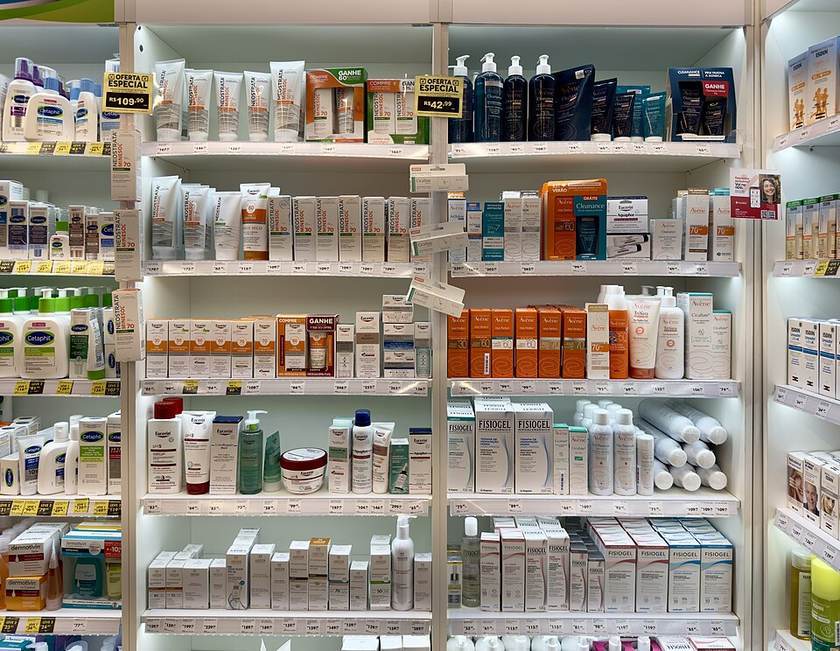
The dupe is one of the most useful ideas in beauty and one of the loosest. It can mean a product with a genuinely comparable formula at a third of the price, or a product that shares a shade name, a packaging shape and nothing else. The word does not distinguish between them, which is why comparisons have to be made rather than accepted.
This guide sets out a method. It names no products, compares no brands and makes no claim about any product's effectiveness — those would require testing we have not done.
What "dupe" actually claims
"Dupe" is a marketing and community term, not a technical one. It asserts similarity without specifying the respect in which two products are similar, and there are at least four distinct claims hiding inside it.
Formula similarity — the ingredients and their approximate proportions are comparable. The strongest version of the claim, and the hardest to verify.
Performance similarity — the products behave the same in use, whatever is inside them.
Sensory similarity — texture, finish, scent and feel are alike, which is often what people actually mean.
Appearance similarity — the colour or the packaging matches. The weakest version, and the most common.
Before evaluating any dupe claim, establish which of the four is being made. A product duping another's shade is not duping its formula, and a product with a similar ingredients list may feel entirely different on the skin.
Comparing ingredients lists side by side
The ingredients list is the best evidence available before purchase, and its limits matter as much as its contents.
Read both lists using the method in how to read a cosmetics ingredients list: identify the base from the first entries, locate the one per cent line by finding the preservatives and other low-percentage staples, and note where each product's headline ingredient sits relative to it.
Then compare in three passes. First the first five ingredients, which set the base and the bulk of the formula — two products differing here are different products regardless of what follows. Then the position of the ingredient the claim rests on, checking whether both sit above or below the line. Then everything below the line, remembering that order there carries no information at all, so apparent differences may be nothing and apparent matches may hide very different proportions.
Watch for two traps: the same ingredient appearing in different chemical forms, which are not interchangeable, and a trademarked complex on one list resolving into ordinary ingredients on the other.
Where formulation, not ingredients, makes the difference
An ingredients list is a parts list, not a recipe, and the unpublished parts are where two similar lists diverge.
Concentrations are not disclosed. pH is rarely stated, and some ingredients only work within a narrow range. Particle size, purity and grade vary between suppliers of nominally identical materials. The order and conditions of manufacture affect stability and texture. Delivery systems — how an ingredient is stabilised and released — are proprietary and invisible.
This is why the honest answer to "is the formula the same?" is usually "the lists are similar and the formulas are unknown". The gap is largest exactly where marketing is loudest: in products sold on an active ingredient, where concentration and stability govern the outcome, as set out in skincare actives and concentration.
Texture, wear and finish: the things a list can't show
Most people who abandon a dupe do so for sensory reasons rather than performance ones.
Texture and slip determine whether a product is pleasant to apply. Absorption rate decides whether something sits on the surface. Finish — matte, satin, luminous — changes appearance more than colour does. Wear behaviour, including how a product settles or transfers over hours, is invisible on any list. Scent, or its absence, is the single most common reason a swap fails.
None of this can be researched from a listing. Three practical responses: buy the smallest size first, as recommended in beauty cost per use; use in-store testers where hygiene allows; and read reviews specifically for sensory language rather than verdicts, filtering for manipulation first using how to spot fake reviews. Repeated, specific descriptions of texture and finish from unrelated reviewers are the most reliable pre-purchase evidence available.
Shade matching across brands
Shade names and numbers are set by each brand for its own range. There is no cross-brand system, so a matching name or number is coincidence, and undertone descriptions are used inconsistently.
Three things defeat naive shade matching. The base a pigment sits in changes how it reads, so the same nominal colour can look different in two formulas. Finish alters perceived depth, with matte generally reading darker than luminous. And oxidation means some products shift after application, so the swatch is not the final colour.
Practical method: compare swatches photographed in daylight rather than in artificial or filtered light; compare against your own skin rather than against another swatch; check the finish before the colour; and where a brand publishes undertone information, treat it as that brand's own scale rather than an absolute.
Counterfeits versus legitimate dupes
These are frequently conflated and could not be more different.
A dupe is a legitimate product, made by another company, sold under its own name, subject to the same cosmetics regulation as anything else on the shelf: a responsible person, a product information file, safety assessment, and compliant labelling.
A counterfeit is a fake of the original, sold as the original. It sits outside any regulated supply chain, so nothing is known about its contents, manufacture or safety, and it is unlawful.
Warning signs of a counterfeit: a price far below every legitimate seller; packaging with spelling errors, wrong fonts or poor print quality; missing batch codes or labelling required on genuine products; sellers with no verifiable identity; and pressure to pay outside a platform. Buy from the brand or an authorised stockist where you can, and treat a bargain that no legitimate retailer can match as an explanation rather than an opportunity — the reasoning in how to judge product quality online.
Categories where duping works best
Duping succeeds in inverse proportion to how much of a product's performance comes from proprietary formulation.
Most likely to work: simple single-purpose products built on well-understood bases; basic cleansers and rinse-off products, where dwell time is short; and products where the desired property is a physical one, such as an oil's emolliency or a powder's texture.
Least likely to work: products sold on a stabilised active, where concentration and formulation govern the outcome; complex emulsions where texture is the point; anything long-wear, where polymer systems do the work; and colour products where pigment quality and dispersion determine payoff.
A useful heuristic: the more a product's marketing rests on how it was made rather than what is in it, the less likely a list-based comparison will predict the result — and the more scrutiny the original's own claims deserve, using beauty marketing claims explained.
A four-step dupe comparison method
- Establish which claim is being made — formula, performance, sensory or appearance — and evaluate only that.
- Compare both ingredients lists in three passes: first five, position of the key ingredient relative to the one per cent line, then everything below the line, treating that section as unordered.
- Identify what the list cannot tell you — concentration, pH, delivery, texture, finish, wear — and decide whether those are the properties you are buying. If they are, no list comparison will settle it.
- Buy small and test, in daylight where colour matters, one product at a time so you can attribute the result. Then calculate cost per use rather than comparing shelf prices, since the cheaper product is only cheaper if you finish it.
The honest conclusion is that dupes are neither the bargain nor the disappointment they are alternately claimed to be. They are a comparison problem, and the comparison is tractable if you are clear about which respect you are comparing.
Frequently asked questions
Are dupes as good as the original?
Sometimes, depending on the category. Where performance rests on a well-understood base, a cheaper version can be close. Where it rests on formulation detail — texture, stability, delivery, pigment quality — similar lists can behave quite differently.
Does a matching ingredients list mean a matching product?
No. Lists give order by weight down to one per cent and nothing below, and never disclose concentration, pH, particle size or processing. Two products can share almost every name and differ substantially.
Is a dupe the same as a counterfeit?
No. A dupe is a legitimate product from another brand sold under its own name. A counterfeit is a fake sold as the original, outside any regulated supply chain, with no assurance about contents or safety.
Do shade names transfer between brands?
Not reliably. Shade names and numbers are set per brand, and the same pigment reads differently in a different base. Compare swatches in daylight and check finish as well as colour.
How we write this guide
This article is research-led and confined to method. It relies on the labelling rules described in our ingredients guide — descending order by weight down to one per cent, free ordering below it, and no requirement to disclose concentrations, pH or processing — which together define what a list-based comparison can and cannot establish.
We name no products, no brands and no dupe pairs, and we make no claim about any product's effectiveness or equivalence: verifying that would require formulation data and testing we do not have. Nothing here is medical or dermatological advice. Counterfeits are described in terms of supply-chain and labelling signals rather than by naming sellers or platforms.
Recommended Today may earn commission from links to retailers. Commission does not influence our editorial content or the order of any recommendation. This guide is reviewed at least every 18 months. Next scheduled review: February 2028.