Leather Grades Explained: Full-Grain, Top-Grain, "Genuine" and Bonded
"Genuine leather" is a grade, not a compliment. What each leather term describes, how the grades wear, and which labels tell you almost nothing.
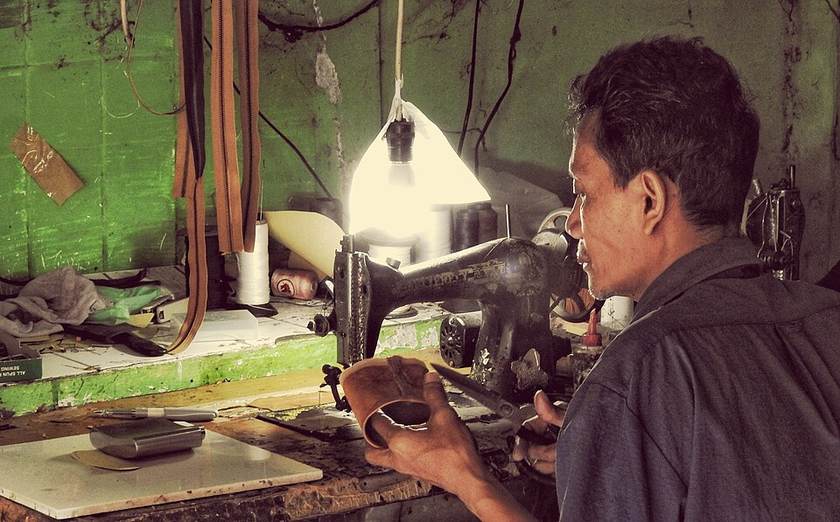
Leather is sold with a vocabulary that sounds technical and is largely promotional. "Genuine leather" stamped into a wallet reassures most buyers, and describes one of the less durable materials in the category. "Real leather" says even less. Meanwhile the terms that carry actual information appear mainly on products from makers who expect you to know them.
The whole vocabulary becomes readable once you understand how a hide is split.
How a hide is split, and where the grades come from
A hide is not uniform. Its outer surface — the grain — has a dense, tightly packed, irregular fibre structure, developed because it was the animal's exterior. Below it the fibres become progressively looser and more uniform.
Hides are too thick for most uses, so they are split horizontally into layers. The top layer includes the grain and the dense fibre beneath it. The lower layers, called splits, contain the looser fibre with no natural grain surface at all.
That single fact explains the grades. Everything premium is a description of how much of the original grain survives; everything cheap is a description of a lower split with a surface applied to imitate one. Durability follows the fibre density, which is why the layers cannot be made equivalent by finishing.
Full-grain and top-grain
Full-grain retains the entire grain surface, unsanded. Its natural markings — healed scars, insect marks, growth lines — remain visible, which is why it is used by makers who treat those as character rather than as defects. It is the densest and most durable option, resists moisture better than the layers below, and develops a patina: the surface darkens and softens with use and oils rather than degrading.
Top-grain has had the outermost surface sanded or buffed to remove imperfections, usually with a finish or embossed texture applied. The result is more uniform, often more stain-resistant, thinner and more supple — and slightly less durable, because part of the densest fibre has been removed. Most quality mass-market goods use it, and it is a legitimate choice rather than a compromise.
A subtype worth knowing: corrected grain is top-grain that has been sanded more heavily and given an artificial grain pattern, sitting a step further from the original surface.
What "genuine leather" actually denotes
"Genuine leather" simply asserts that the material is leather rather than an imitation. It says nothing about which layer, how it was finished, or how it will wear — and in practice it is most often applied to lower splits with a surface coating.
Two things follow. As a positive claim it is nearly empty, since any of the grades above would be described by a maker in more specific terms. And its prominence is inverted: a wallet stamped "genuine leather" in gold is making the least informative claim available, while a full-grain product often says nothing at all beyond the tannery or the hide type.
Terminology use is not entirely unpoliced — describing a material as leather when it is not can mislead a buyer, and misleading descriptions fall under general consumer protection rules — but the grades themselves are trade conventions, so no legal definition rescues you from reading the specification.
Bonded, coated and split leather
Split leather is a lower layer with no natural grain. Finished and embossed, it can look convincing when new. Suede is the napped finish of a split, and is a legitimate material in its own right rather than a downgrade — judged as suede rather than as failed grain leather.
Coated leather is leather with a substantial polymer layer applied. The surface you touch and see is the coating, so wear behaviour is governed by the polymer rather than the hide, and it tends to crack rather than patinate.
Bonded leather is the furthest from a hide: shredded leather fibre and offcuts bound with adhesive onto a backing, then given a polymer surface. It contains leather, and behaves like a coated composite. Its characteristic failure is peeling and flaking as the surface separates from the backing — the reason it appears frequently in low-cost furniture and bookbinding and rarely in goods expected to last.
None of these is dishonest when described accurately. The problem arises when they are described only as "leather", which is why the specific term is the thing to look for.
Tanning methods and why they matter
Tanning converts a raw hide into a stable material, and the method affects feel, ageing and cost.
Vegetable tanning uses tannins from plant sources. It is slower and produces a firm, dense leather that develops the deepest patina, moulds to use, and is favoured for belts, bags, saddlery and shoe soles. It is more sensitive to water marking, particularly when new.
Chrome tanning uses chromium salts, is far faster, and produces softer, more supple, more water- and heat-resistant leather. It accounts for the majority of leather produced and is the right choice for garments, upholstery and linings.
Combination tanning uses both to balance the properties.
Neither is superior in the abstract; they suit different jobs. What is informative is a maker stating the method at all — like a bedding brand publishing fibre and weave, it signals a specification-led product rather than an appearance-led one, in the same way discussed in how to judge clothing quality.
Vegan and alternative materials, compared honestly
"Vegan leather" describes what a material is not. The materials themselves vary enormously.
Polyurethane-based materials are the most common: a polymer surface on a textile backing. Quality varies widely, and wear is by surface degradation — cracking, peeling, delamination — rather than patina.
PVC-based materials are more durable in some respects and stiffer, with their own environmental considerations.
Plant-based alternatives derived from materials such as cactus, apple or mushroom typically incorporate a polymer binder and a backing, so the plant content is one component rather than the whole material. Where a percentage is published, that is the number to read — the same composition-first habit as in fabric composition explained.
Judge these as coated textiles: check the backing, the coating thickness where stated, and any published abrasion or flex testing. And treat environmental comparisons cautiously in both directions, since the life-cycle arguments for hides and for polymer alternatives are genuinely contested and neither side's marketing settles them.
Signs of quality in photographs
- Visible natural variation — subtle differences in grain across a panel suggest a real grain surface rather than an embossed uniform one.
- Cut edges. Look at an unfinished edge: solid hide shows a consistent fibrous cross-section, while a coated or bonded material shows a distinct surface layer over a different backing.
- Edge finishing — burnished, painted or folded edges indicate work; raw stapled edges do not.
- Stitching — density, straightness and reinforcement at stress points, exactly as with garments.
- Hardware and how it is attached, since buckles and zips are common failure points.
- Lining and internal construction, which is where cost is cut invisibly.
- What the listing states. A maker naming the grade, the tannage and the thickness is being specific; one saying only "leather" has chosen not to be — the disclosure principle in how to judge product quality online.
Care, patina and expected lifespan
Grain leathers behave like a material that ages; coated and bonded materials behave like a surface that degrades. That distinction governs both care and expectations.
For grain leather, care is simple and mostly about moisture balance: keep it clean, let it dry naturally away from direct heat if it gets wet, and condition occasionally rather than constantly, following the maker's guidance for that tannage and finish. Patina is the accumulation of use — darkening, softening, burnishing at contact points — and is not damage.
For coated and bonded materials, conditioning does little because the surface is polymer, and the practical aim is to avoid abrasion, heat and prolonged flexing at the same point.
We publish no lifespans, because they depend on the grade, the construction, the use and the care. What is dependable is the ranking: full-grain, well constructed and repairable, delivers the most uses per pound where the item is used often — the arithmetic in cost per use and, for wardrobe items, cost per wear. Repairability matters as much as grade: resoleable shoes, replaceable straps and hardware, and stitching that can be redone turn a purchase into a decades-long one.
Frequently asked questions
Is "genuine leather" good leather?
It usually indicates a lower grade. The phrase confirms the material is leather rather than imitation, but it is commonly applied to layers below the outer surface that lack the dense fibre structure making leather durable.
What is the difference between full-grain and top-grain?
Full-grain keeps the outermost hide surface with its natural markings; top-grain has had that surface sanded or buffed and usually finished, giving a more uniform look with slightly less durability and character.
Is bonded leather real leather?
It contains leather as shredded fibre bound with adhesive onto a backing and finished with a polymer surface. It behaves like a coated composite and typically wears by cracking and peeling rather than developing patina.
Are vegan leathers more durable?
It depends on the material. Polyurethane and PVC alternatives vary widely and wear by surface degradation; plant-based options usually include a polymer binder and backing. Judge them as coated textiles on their specific construction.
How we write this guide
This article is research-led. It draws on established leather trade conventions — how hides are split, the fibre density gradient from grain to lower splits, the distinctions between full-grain, top-grain, corrected grain, split, coated and bonded materials, and the differences between vegetable, chrome and combination tanning — together with the general position that misleading material descriptions fall under consumer protection rules while the grades themselves are trade terms rather than legal definitions.
We have handled no goods, name no brands or tanneries, and publish no lifespans, thicknesses or durability figures: these depend on grade, construction, use and care, and an invented number would be treated as a benchmark. Environmental comparisons between hides and alternatives are genuinely contested and we do not adjudicate them here.
Recommended Today may earn commission from links to retailers. Commission does not influence our editorial content or the order of any recommendation. This guide is reviewed at least every 18 months. Next scheduled review: February 2028.