How to Choose Appliances You Can Actually Repair
Spare parts availability, ecodesign rules and repair costs decide whether an appliance is a ten-year purchase. Here's how to check before you buy.
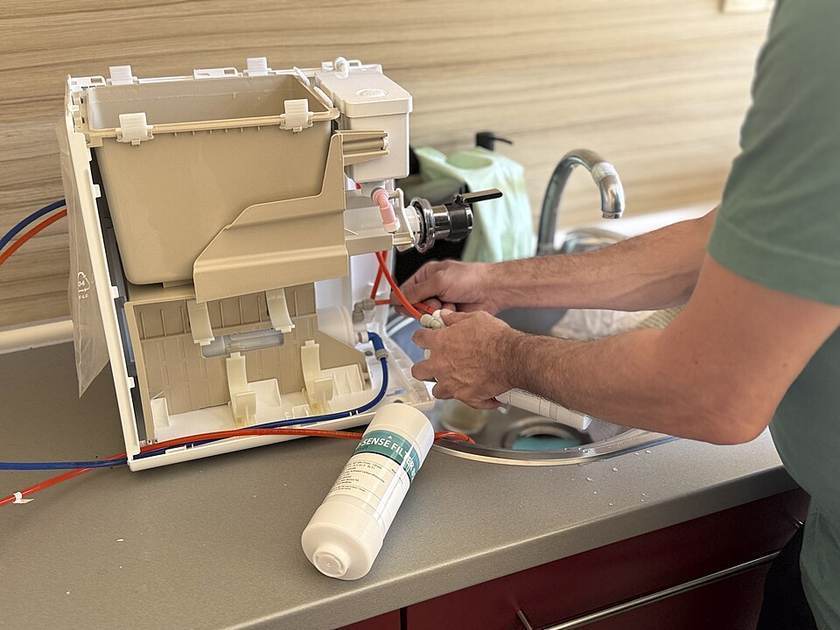
Two washing machines can share a price, a capacity and an energy class, and differ enormously in how long they last — not because one is better built, but because one can be opened, diagnosed and fixed with a part that costs a fraction of a replacement, and the other cannot.
Repairability is a specification. It is simply one that almost nobody publishes, and one you can research in about five minutes before you buy.
Why repairability is a purchase decision, not an afterthought
Every appliance fails eventually, usually at one predictable component rather than everywhere at once. What decides whether that failure is an interruption or an ending is whether the part exists, whether it can be reached, and what the labour costs.
This turns a single purchase into a long stream of use, which is exactly what the arithmetic in cost per use rewards. A repairable machine that survives two component failures has delivered far more use per pound than an identical sealed one retired at the first.
It also changes what "expensive" means. A dearer appliance with an established parts market and accessible construction is frequently the cheaper decision over a decade, and that reasoning belongs in the whole-life view in total cost of ownership rather than in the price comparison.
UK ecodesign rules on spare parts, in plain English
Since 2021, ecodesign rules applying in Great Britain have placed spare-parts obligations on manufacturers of several household categories, including washing machines and washer-dryers, dishwashers, refrigeration and electronic displays.
Four points matter to a buyer. Parts must be made available for a defined period after the last unit of a model was placed on the market — ten years for washing machines and washer-dryers, seven for some other categories. Most parts need only be supplied to professional repairers, with a shorter list, typically including items such as door hinges and seals, available to end users directly. Parts must be replaceable using commonly available tools and without permanently damaging the appliance. And orders must be delivered within a set time — fifteen working days.
Two caveats. The rules apply to Great Britain, with equivalent EU requirements applying in Northern Ireland. And they cover specific categories and specific parts — an appliance outside those categories has no such guarantee, which is precisely why small appliances and connected devices are the weakest part of the market for repair.
How to check parts availability in five minutes
- Find the exact model number, not the range name. Manufacturers sell near-identical machines under many model codes, and parts differ between them.
- Search the model number with the component you expect to fail — pump, bearing, door seal, hinge, control board, filter.
- Look for independent parts suppliers, not just the manufacturer. Several suppliers listing named parts with prices means a real market exists.
- Check whether parts are sold individually or only as assemblies. An assembly costing half the machine's price is a technical availability rather than a practical one.
- Note who can buy them. Some parts are sold only to registered engineers, which is lawful and normal, but it means every repair carries labour.
- Search for repair videos and guides for that model. Their existence tells you the machine is serviceable and that others have done it.
A model with a thriving parts market is telling you two things at once: it can be fixed, and it needs fixing often enough for a market to exist. Both are useful, and the first outweighs the second.
Manuals, exploded diagrams and service documentation
The documentation a manufacturer publishes is a good proxy for how it expects its products to be treated.
User manuals cover operation and basic maintenance — cleaning filters, descaling, clearing pumps. Useful, and the minimum.
Exploded parts diagrams show every component with a reference number, which is what lets you identify and order the right part. Their public availability is a strong positive signal.
Service manuals include fault codes, diagnostic procedures and dismantling sequences. Where these are published openly rather than restricted to authorised engineers, repair is genuinely accessible.
Check before buying whether these exist for the model. A manufacturer publishing diagrams and fault codes has designed for service; one publishing only a quick-start guide has made a different decision, and it will show up years later — the same construction-and-intent reading applied throughout how to judge product quality online.
The parts that fail and what they typically cost
We publish no prices, because parts pricing varies by brand, model and supplier and would be out of date within months. What is stable is which parts fail, and the shape of the cost.
Wear parts — seals, filters, belts, brushes, hoses. Cheap, frequently owner-fittable, and the most common cause of a machine being discarded unnecessarily.
Mechanical components — pumps, drain assemblies, hinges, latches, dispensers. Moderate cost, usually available individually, generally within reach of a competent independent engineer.
Structural or high-labour items — drum bearings in particular, where the part may be inexpensive but the labour to reach it is substantial, and where some designs seal the drum as a single unit that cannot be split. This is the classic case where a cheap part becomes an uneconomic repair by design.
Electronics — control boards and displays, usually the most expensive single component and rarely repairable at component level.
Before buying, look up the two or three parts most associated with that model and note both the part price and whether it is a job requiring dismantling. That combination, not the part price alone, is what determines whether a future failure gets fixed.
Independent repair vs manufacturer service
Manufacturer service brings original parts, model-specific diagnostics and work that generally preserves the guarantee. It usually costs more, and availability varies by area.
Independent engineers are typically cheaper and often faster, and experienced ones know the common failures of a model better than anyone. The constraints are access to restricted parts and the effect on a manufacturer's guarantee.
Two things to settle before booking. Check the guarantee terms first: many require approved servicing, and unauthorised work can affect cover — the distinction between a commercial guarantee and your statutory rights is set out in warranty vs guarantee in the UK. And ask what happens to the call-out fee if the machine cannot be repaired, since a diagnosis-only visit still costs money.
Where a fault appears early in an appliance's life, the retailer route usually comes before either, because the statutory remedies sit with the seller rather than with a repairer.
When repair stops making financial sense
The honest test is not repair cost against replacement cost. It is repair cost against the remaining life the repair buys.
Work through four questions. What will the repair cost in total, including parts, labour and call-out? How much of the appliance's expected life has already elapsed, judged against the anchors in how long should things actually last? Is this the first failure, or the third — because a machine failing repeatedly is telling you about its remaining life? And would a replacement be materially cheaper to run, using the payback method in appliance running costs in the UK?
Repair usually wins where the appliance is young, the fault is a known wear item, parts are available, and the machine has no other symptoms. Replacement usually wins where labour is high because the design fights the repair, where the failure is a control board on an older machine, or where several components are near the end of their lives together.
And where replacement does win, a professionally refurbished machine with a guarantee is often the better economic answer than a new one — the routes and protections are compared in refurbished, ex-display or second-hand. Buying with repairability in mind, as set out in how to choose kitchen appliances, is what keeps that decision cheap next time.
Frequently asked questions
Are manufacturers required to supply spare parts in the UK?
For several household categories, yes. GB ecodesign rules require defined parts to be available for a set period after a model was last placed on the market — ten years for washing machines and washer-dryers, seven for some other categories — with most parts supplied to professional repairers and a shorter list to end users, replaceable with commonly available tools.
How do I check parts availability before buying?
Search the exact model number with the component you expect to fail, and look for named parts listed by independent suppliers as well as the manufacturer. An active market with individual parts, diagrams and prices is a strong durability signal.
Does repairing it myself void the guarantee?
It can affect a manufacturer's guarantee, which often requires approved servicing. It does not remove your statutory rights against the retailer for a fault present at supply, though self-repair may make proving that harder.
When does repair stop making sense?
When the total cost approaches a meaningful share of replacement and much of the appliance's expected life has gone. Compare the cost against the remaining life the repair buys, not against a new machine's price alone.
How we write this guide
This article is research-led and checked against the rules themselves: the ecodesign requirements applying in Great Britain since 2021, which set spare-parts availability periods running from when the last unit of a model was placed on the market, distinguish parts available to professional repairers from those available to end users, require replacement using commonly available tools without permanent damage, and set a fifteen working day delivery requirement. Equivalent EU requirements apply in Northern Ireland.
We publish no parts prices, repair costs or failure rates: these vary by brand, model, supplier and region, and a figure quoted here would be stale within months while being repeated as a benchmark. We name no brands, models or repairers, and nothing was tested or ranked. Guidance on whether to attempt a repair yourself is outside our scope — electrical and gas work carries real safety and legal considerations, and a qualified engineer is the right source.
Recommended Today may earn commission from links to retailers. Commission does not influence our editorial content or the order of any recommendation. This guide is reviewed at least every 12 months, and sooner if ecodesign requirements change. Next scheduled review: August 2027.