Small Kitchen, Big Decisions: How Buying Changes When Space Is Tight
In a small kitchen, footprint, storage and multi-use matter more than capacity. A method for choosing equipment that earns its worktop space.
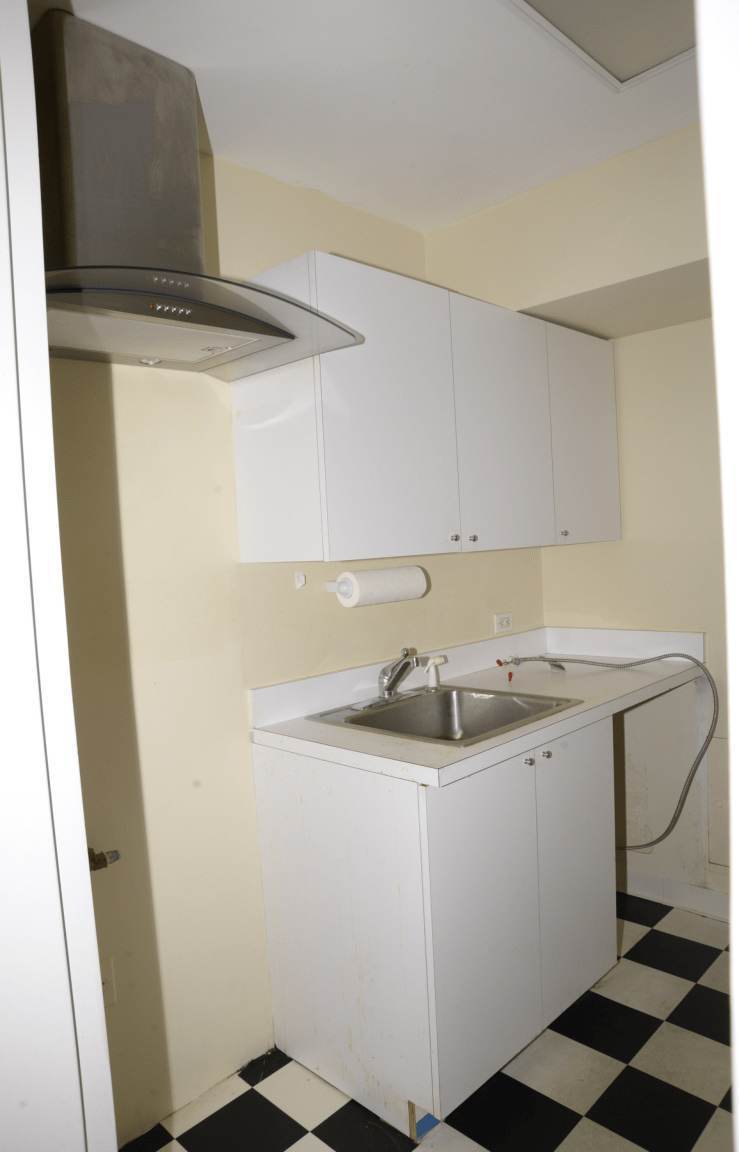
Most kitchen buying advice assumes space is free. It compares capacity, features and performance, and treats the physical size of a thing as an afterthought — which is fine in a large kitchen and actively misleading in a small one.
When space is the binding constraint, the whole hierarchy of criteria changes. Footprint outranks capacity, storability outranks capability, and the question stops being "is this good?" and becomes "is this good enough to deserve the space it takes?"
Worktop space is the real budget
In a small kitchen, usable worktop is scarcer than money. It determines whether you can prepare food, whether the room is pleasant to work in, and whether appliances get used at all — anything that has to be lifted out and set up will be used less than something ready to hand.
Treat it as a budget with a fixed total. Measure your genuinely usable worktop, excluding the area beside the hob you need for pans, the space around the sink and any corner you cannot reach. Then allocate that area deliberately, one appliance at a time, and accept that adding something means removing something.
The allocation rule that works: rank by frequency, not capability. Daily use earns permanent space. Weekly use earns a cupboard, provided the item is light enough that you will actually lift it. Occasional use earns storage elsewhere, or nothing at all — the honest conclusion that the arithmetic in cost per use reaches for most single-purpose gadgets.
Footprint, clearance and door swing
The published dimensions of an appliance are not the space it needs.
Add clearance for ventilation, which manufacturers specify and which is a safety requirement rather than a suggestion. Add the space for doors and lids to open — a lid hinging upwards under a wall unit is the classic small-kitchen failure. Add the operating footprint of anything that slides, extends or requires a bowl to be removed. Add the cable run and the position of sockets, because an appliance tethered to a socket at the far end of a run has a much smaller usable area than the worktop suggests.
Then measure the space in three dimensions, including the height under wall units, which is the measurement people most often forget. Marking the footprint out with masking tape before ordering takes ten minutes and prevents most returns — the method set out in how to measure before buying furniture, which applies to worktop appliances exactly as it does to sofas.
Multi-function appliances: when they work and when they compromise
Multi-function appliances are the obvious answer to a small kitchen and are right about half the time.
They work when each function is one you genuinely use, when the compromises fall on tasks you rarely do, and when the combined item replaces two things you currently own and store. In that case the space saving is real and the compromise is invisible.
They compromise when the combination prevents simultaneous use — one appliance cannot do two jobs at once, which matters when cooking a meal rather than a single dish. When cleaning between functions is onerous enough that you avoid one of them. When a single component failure removes several capabilities at once, which is the durability argument from how to choose kitchen appliances. And when the item is large enough that it occupies the space of both things it replaced.
The honest test: name the two appliances it replaces, and confirm you own and use both. If you can only name one, it is a single-function appliance with extra failure modes.
Capacity you'll actually use
Capacity is the specification most often bought for an imagined occasion, and in a small kitchen you pay for it continuously.
Size for your normal week rather than your busiest conceivable event. Cooking in two batches occasionally is a smaller cost than housing, cleaning and storing excess capacity every day. Larger appliances also take longer to heat, use more energy for the same task, and are heavier to move — a compounding penalty in a small space.
Two adjustments. Check the usable capacity rather than the gross figure, since fridge and freezer volumes in particular differ between the two. And where a large capacity is genuinely needed occasionally, consider whether borrowing, hiring or a second cheap item stored elsewhere beats permanently housing the larger machine.
Noise in an open-plan flat
Noise is a specification that barely matters in a separate kitchen and matters enormously in one room.
In an open-plan or studio layout there is no distance and no door between you and the appliance, and hard surfaces — tiles, glass, laminate — reflect rather than absorb. A machine that is unremarkable in a closed kitchen can dominate a room where you also work, watch and sleep.
Use the published figures: airborne noise in decibels appears on energy labels for several appliance categories, along with a noise class, and these are among the few genuinely comparable acoustic figures available, as covered in how to choose kitchen appliances. Remember that decibels are logarithmic, so a difference of ten roughly halves or doubles perceived loudness while three is real but modest.
Two practical points: frequency matters as much as level, since a low hum carries where a higher whirr does not; and vibration transmitted into a worktop or a floating floor can be more intrusive than the machine's own rating suggests.
Storage, stacking and nesting
Storability is a purchasing criterion, and it is almost never in the specification.
Look for items that nest — bowls, containers, measuring equipment, cookware sold as sets designed to stack. Look for flat or stackable forms rather than awkward shapes, and for handles that fold or detach. Prefer fewer, better pieces over sets, since a set bought for two useful items stores the other six for years.
Cookware deserves particular attention because it is heavy, bulky and used constantly: three or four well-chosen pieces matched to what you actually cook will outperform a matched set on both performance and space, as set out in cookware materials explained.
And weight is a storage criterion in its own right. Anything you must lift from a low cupboard to a worktop needs to be light enough that you will do it willingly, or it will quietly stop being used.
What to buy last, or not at all
In a small kitchen, restraint is the highest-return decision available.
Buy last: anything single-purpose; anything for a cuisine or technique you have not yet established a habit around; anything bought because it was reduced rather than because there was a gap; and anything whose main appeal is that it looks good on a worktop.
Consider not at all: appliances that duplicate something you own, novelty items, and equipment for tasks a basic tool performs adequately.
Two closing habits. Operate a one-in-one-out rule for worktop appliances, which forces the frequency question at the moment of purchase. And before buying anything, spend a week noting what you actually reach for — most people find the list is much shorter than their cupboards suggest. The same space-first logic applies to household equipment generally, including the storage and floor-head questions in vacuum specifications explained.
Frequently asked questions
Are multi-function appliances worth it?
When the functions are genuinely used and the compromises fall on tasks you rarely do. They are a poor bet when one appliance does several jobs adequately and none well, or when you cannot do two things at once. Name the two items it replaces — and confirm you use both.
How do I decide what deserves worktop space?
Rank by frequency of use, not capability. Daily use earns permanent space; weekly use earns a cupboard if it is light enough to lift; occasional use earns storage elsewhere or nothing.
Should I buy smaller capacities?
Usually, provided capacity covers normal use rather than your busiest imaginable occasion. Sizing for a rare event means paying to house, power and store excess every day.
Does noise matter more in a small flat?
Considerably — no distance, no door, and hard surfaces reflecting sound. Published decibel figures and noise classes are among the few comparable acoustic figures available.
How we write this guide
This article is research-led and category-level. It draws on manufacturers' published clearance and ventilation requirements, the noise and capacity information carried on energy labels for several appliance categories, and standard measuring practice for fitted and freestanding equipment.
We have tested no appliances, and this guide names no brands or models: we hold no verified comparison data for any kitchen category and will not publish a ranking without it. We publish no dimensions, capacities or decibel figures, because kitchens and products vary and the method is designed to produce your own numbers. Ventilation clearances are safety-relevant and should be taken from the manufacturer's instructions for the specific appliance rather than from any general guide.
Recommended Today may earn commission from links to retailers. Commission does not influence our editorial content or the order of any recommendation. This guide is reviewed at least every 18 months. Next scheduled review: February 2028.