IP Ratings Explained: What "Waterproof" Actually Promises
IPX4, IP67, IP68: what each digit measures, what the test involves, and why none of them means you can take a device swimming with confidence.
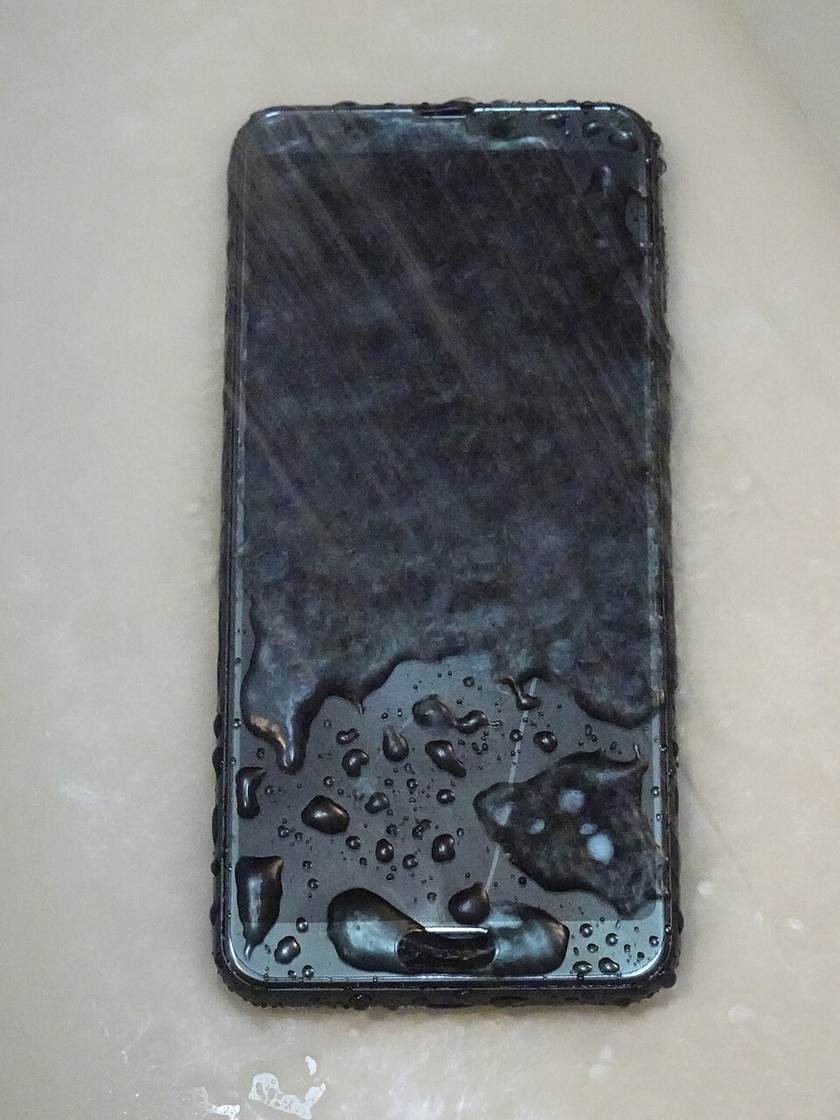
"Waterproof" is not a technical term, and almost nothing sold to consumers is waterproof in any absolute sense. What exists instead is an ingress protection code — two digits describing how a sample performed in two specified tests, under conditions that are nothing like a beach, a shower or a washing machine.
Understanding what those tests actually involve is the difference between using a rating sensibly and discovering its limits at your own expense.
What the two digits measure
An IP code carries two independent digits, and they describe different hazards.
The first digit covers solid objects, on a scale from 0 to 6. It runs from no protection, through progressively smaller objects — hands, fingers, tools, wires — to protection against dust ingress, ending at dust-tight at 6.
The second digit covers water, on a scale from 0 to 9. It runs from dripping water, through dripping at an angle, spraying, splashing, jets and powerful jets, to temporary and then continuous immersion, with the highest levels covering high-pressure, high-temperature jets used in industrial cleaning.
An X in either position means that property was not tested — not that protection is absent. IPX4 is a device tested against water but not rated for dust; IP5X is the reverse. Manufacturers use X routinely and legitimately, because testing costs money and not every property is relevant.
The tests behind each rating
Each digit corresponds to a defined procedure, and the procedures share assumptions that matter enormously.
The specimens are new. The water is clean fresh water. The conditions — pressure, flow rate, duration, distance, angle — are specified and controlled. Splash and spray tests direct water at the enclosure from set angles for set periods. Jet tests use a defined nozzle at a defined pressure and distance. Immersion tests submerge the sample to a stated depth for a stated time, conventionally one metre for thirty minutes at the temporary-immersion level, with deeper or longer conditions specified by the manufacturer at the next level up.
Two things follow directly. A rating is a statement about a sample in a test, not a guarantee about your unit in your life. And because manufacturers may specify the conditions at the highest immersion level themselves, two devices carrying the same headline code can have been tested rather differently — the reason to read the manufacturer's own stated conditions, exactly as in product specifications explained.
IPX4 to IP68, compared honestly
IPX4 — splashing from any direction. Practically: rain, sweat, a splash at the sink. This covers the great majority of real-world accidents and is entirely adequate for most portable electronics.
IPX5 and IPX6 — jets and powerful jets. Practically: rinsing under a tap, heavy rain with wind, hosing down. Relevant for outdoor and workshop equipment.
IPX7 — temporary immersion under the conventional conditions. Practically: survives being dropped in a sink, a puddle or a bath and retrieved promptly.
IPX8 — immersion beyond IPX7, under conditions the manufacturer states. Practically: only as good as those stated conditions, which is why the manufacturer's own wording matters more than the digit.
IP67 and IP68 — the same water levels combined with a dust-tight rating, which is the meaningful addition for anything used outdoors.
An important subtlety: the water scale is not fully cumulative. Immersion and high-pressure jets test different failure modes, so a device rated for immersion has not necessarily been tested against jets unless both ratings are stated.
What the ratings deliberately exclude
- Salt water, which is corrosive and is not what the tests use.
- Chlorinated or treated water, including pools and hot tubs.
- Hot water and steam, where temperature changes create pressure differentials across seals — showers are a common and underestimated hazard.
- Soaps, detergents and solvents, which reduce surface tension and attack adhesives.
- Movement under water, which raises effective pressure well beyond a static depth.
- Pressure at depth, including a swimming stroke or a wave.
- Liquids other than water — coffee, wine, oil.
- The ports. A device may be rated while wet but require drying before charging, and charging a wet port is a common cause of damage.
Why ratings degrade with age and damage
Ingress protection is delivered by physical components: gaskets, adhesives, membranes and precisely mated surfaces. All of them age.
Adhesives lose strength with heat and time. Gaskets compress, harden and take a set. Drops distort housings and break seal continuity even where no damage is visible. Repairs and battery replacements break and remake seals, and the rating afterwards depends entirely on whether they were properly restored. Grit trapped in a gasket channel is enough to open a path.
So a rating is a fact about a device when new, and an estimate thereafter. Treat an older device as having less protection than its label states, particularly if it has been dropped or opened — the same ageing logic that governs battery capacity in battery life claims explained.
Warranty exclusions for water damage
Here is the part that surprises people: a device can carry a high ingress rating and still have liquid damage excluded from its guarantee.
Manufacturers commonly exclude liquid damage, and many devices contain liquid contact indicators — small strips that change colour on contact and are checked during service. The reasoning is consistent with everything above: the rating describes a factory-condition sample under controlled conditions, and the manufacturer cannot verify what a specific unit was exposed to.
Read the guarantee wording before relying on a rating. And separate two things that are easy to conflate: a manufacturer's guarantee is a commercial promise on its own terms, while your statutory rights against the retailer concern whether the goods conformed at the point of supply. If a device rated for immersion fails during use plainly within its stated conditions, that is arguably a conformity question rather than an accident — the distinction set out in warranty vs guarantee in the UK.
Choosing a rating for realistic use
Match the rating to the accident you expect, not to the adventure you imagine.
Everyday carry — phones, earbuds, watches. Splash resistance covers rain, sweat and spills, which is what actually happens. Immersion ratings are a useful margin rather than a licence.
Exercise — sweat is mildly corrosive and persistent, so rinse-and-dry tolerance matters more than depth ratings.
Outdoor and site use — dust protection is usually the more valuable digit, since particulates cause more failures than immersion.
Water sports — ratings are the wrong tool. Look for explicit manufacturer statements about the activity, or dedicated equipment.
Two closing habits. Check what the manufacturer says the rating means for that device, since the useful promise is in their wording rather than the code. And check whether protection survives service, because a device that loses its rating after a battery replacement has a shorter practical life than the code implies — a longevity question in the same family as how to choose future-proof tech, and a construction question of the kind covered in how to judge product quality online.
Frequently asked questions
What do the two digits mean?
The first covers solids on a 0–6 scale, ending at dust-tight; the second covers water on a 0–9 scale, from dripping through jets to immersion. An X means that property was not tested, not that protection is absent.
Does IP68 mean I can swim with it?
No. Immersion ratings come from still, clean fresh water in a laboratory on new samples. Swimming adds movement, pressure, chlorine or salt and temperature change. The manufacturer's stated conditions are the real promise.
Is a higher second digit always better?
Not automatically — the scale is not fully cumulative. Immersion and high-pressure jets test different things, so a device rated for immersion has not necessarily been jet-tested unless both are stated.
Does the rating last for the life of the device?
No. It describes a new sample. Seals and adhesives age, and drops, heat and repairs compromise them, which is why liquid damage is commonly excluded from guarantees.
How we write this guide
This article is research-led. Definitions follow the international ingress protection code — the two-digit structure, the 0–6 solids scale ending at dust-tight, the 0–9 water scale from dripping water through jets to immersion, the meaning of X as untested, and the convention that temporary immersion is assessed at one metre for thirty minutes while the level above is assessed under conditions specified by the manufacturer. Guarantee practice is described from standard manufacturer terms.
We have tested no devices and name no products, and we publish no pressure, depth or duration figures beyond the standard's own conventional immersion conditions. Where a specific device is concerned, the manufacturer's stated conditions and guarantee wording govern, not this guide. Nothing here should be read as an assurance that any particular device will survive any particular exposure.
Recommended Today may earn commission from links to retailers. Commission does not influence our editorial content or the order of any recommendation. Tech & Audio guides are reviewed every 6 months. Next scheduled review: February 2027.