How to Shortlist Products in Under an Hour
Twenty tabs open and no decision? This six-step method turns a category you don't understand into three defensible options in about an hour.
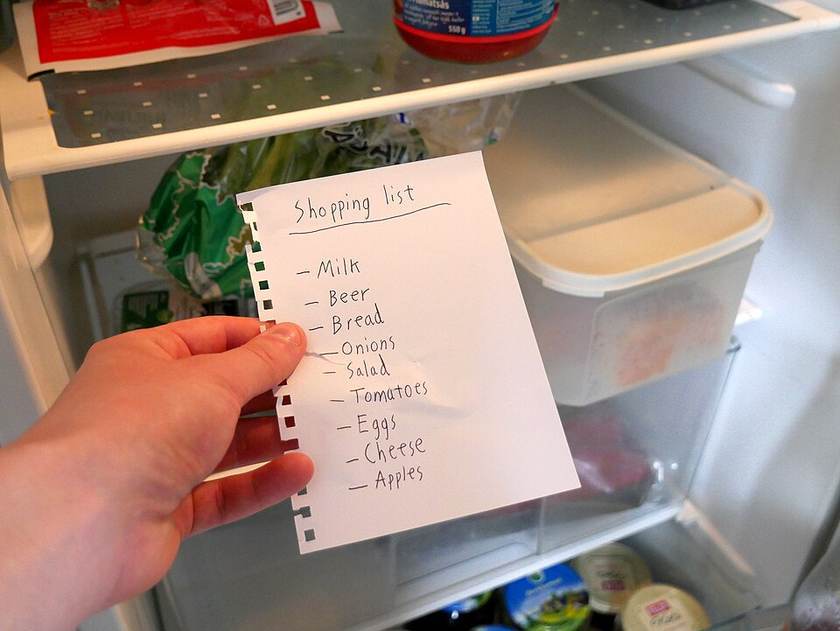
There is a particular kind of stuck that has nothing to do with money. You need one ordinary object, you have read about it for three evenings, and you are further from a decision than when you started. Every option now has a defender and a detractor, and the thing you actually wanted has disappeared behind the comparison.
The method below is designed to end that in about an hour. It works because it inverts the usual order: criteria first, products second.
Why more research often makes the decision worse
Beyond a certain point, additional research stops adding information and starts adding noise. Three mechanisms do most of the damage.
The first is that a larger option set makes choosing harder rather than easier — the more comparable items you hold in view, the more each one's disadvantages become salient, and the more attractive doing nothing looks. The second is that reading unstructured opinion trains you to weight vivid anecdotes over ordinary outcomes: one detailed account of a failure will outweigh many quiet successes, because it is memorable rather than because it is representative. The third is that without written criteria, your standard drifts to match whatever you have just read, so the "best" option changes with the last tab you opened.
The fix is not less research. It is research with a shape.
Step 1: write down the job, not the product
Start with a sentence that contains no product category at all. Not "I need a cordless vacuum" but "I need to clean a flight of carpeted stairs and under a sofa, twice a week, without waking a sleeping baby."
Written that way, the job usually names its own constraints — weight, reach, noise, run time — and occasionally reveals that the category you assumed was wrong. It also protects you from the most common source of regret, which is buying for an imagined version of your life rather than the one you have. That failure mode is the subject of how to avoid buyer's remorse.
Two minutes. Write it in a note, not in your head.
Step 2: fix three hard constraints
Now set three limits you will not negotiate, and be specific enough that they can be tested against a product page: a maximum spend, a physical constraint measured in centimetres or kilograms, and one non-negotiable capability drawn from the job you just wrote.
Three is the right number. One is not a filter; six eliminates everything and sends you back to browsing. Write them down, because the purpose of constraints is to be inconvenient later — when a tempting option misses one and you need something more solid than mood to reject it.
Measure the space now rather than trusting a memory of it. More returns are caused by measurement than by manufacturing.
Step 3: learn the category's five variables
Before looking at a single product, learn what genuinely differentiates products in this category. Every category has roughly five: the dimensions on which items really differ, as opposed to the ones marketing has invented.
Find them by reading two or three explanatory sources rather than any ranking, and by noticing which specifications appear on every product page — those are the ones the industry itself treats as decisive. Write each variable down with an arrow: more or less, and why you want it that way. Where a number is involved, check what it actually measures using product specifications explained, so that you are comparing tested figures rather than marketing constructs.
Twenty minutes, and it is the step people skip. It is also the step that makes the remaining forty minutes work, because from here the products sort themselves.
Step 4: build a three-column comparison
Only now open product pages. Apply your three constraints as a hard filter — anything that fails one is out, without discussion — then score what survives against your five variables and keep the three that fit the job best.
Put them in three columns, one row per variable, plus a row for price and a row for what you would give up by choosing it. That last row is the one that makes the table useful: a comparison with no losses recorded is a wish list. If two options are identical on every row, they are genuinely interchangeable and you should buy whichever is cheaper or easier to return.
When you draw on published recommendations to populate the table, read them with the checks in how to read a buying guide — particularly the question of what the shortlist behind the recommendation was.
Step 5: run negative research on the finalists
Everything so far has been research for. Now spend ten minutes researching against.
For each of the three, search the name with words like "problem", "fault", "stopped working" and "spare part", read the middling reviews rather than the extremes, and look for the same complaint recurring across unrelated owners. One angry account is noise; the same component named repeatedly is a design pattern. Screen out manipulated review pages first, using how to spot fake reviews, and weigh what you find against the construction evidence in how to judge product quality online.
Expect this step to eliminate one finalist. That is what it is for.
Step 6: decide, then diarise a review date
Choose, buy, and write two things in your calendar. First, the end of the return window, a few days early — that is your prompt to check the thing actually does the job, while you can still send it back. Second, a review date matched to the category, at which you ask whether it is still doing the job and whether the running costs match what you expected.
Deciding is a skill that improves only with feedback, and the diary entry is the feedback. It also converts a purchase into a number you can use next time, via cost per use.
The sixty-minute timetable
- 0–5 min. Write the job. Write three constraints. Measure the space.
- 5–25 min. Learn the five variables. Write each with an arrow.
- 25–40 min. Filter hard, build the three-column table, fill in the "what you give up" row.
- 40–50 min. Negative research. Expect to lose one finalist.
- 50–60 min. Decide. Buy. Diarise the return deadline and the review date.
If you finish early, stop. The hour is a ceiling, not a target, and the marginal value of the sixty-first minute is usually negative.
Frequently asked questions
How many options should a shortlist contain?
Three. Two forces a binary before you understand the category; more than four reintroduces the paralysis the shortlist was meant to solve. Three lets you compare on defined criteria and still have a fallback if one is out of stock.
How do I research a category I know nothing about?
Learn the variables before the products. Once you can name the handful of dimensions on which items genuinely differ, and say which way you want each to go, the products sort themselves and the marketing stops working.
Is it worth waiting for a sale?
Only if you have already decided. A shortlist built in advance turns a sale into a trigger rather than a decision — the difference between buying the right thing cheaply and the wrong thing at a discount.
What if all three finalists have bad reviews?
Read what the complaints are about. If different products fail the same way, that is a category-wide limitation and your expectations should move, not your shortlist. If they fail differently, choose the failure you can live with.
How we write this guide
This article is a method piece rather than a product piece. The six steps describe an editorial process we use ourselves when opening an unfamiliar category, and the reasoning about option sets, vivid anecdotes and drifting standards describes well-documented decision-making tendencies in general terms. We have deliberately not attached figures, effect sizes or study citations to those tendencies, because a plausible-sounding statistic is worse than none.
No products were tested and none are named, ranked or recommended here. The sixty-minute timetable is a suggested allocation, not a measured average.
Recommended Today may earn commission from links to retailers. Commission does not influence our editorial content or the order of any recommendation. This guide is reviewed at least every 18 months. Next scheduled review: February 2028.